Meet the MELT Method®
Pain is the last thing your body tells you. Not the first.

MELT is a daily self-care practice built on one idea: pain is the last thing your body tells you, not the first. Your nervous system and your fascia adapt around stress for years, quietly, together, and pain is what happens when the workarounds stop working.

MELT teaches you to read what comes before you ever sense pain, using soft tools, self-application, and as little as ten minutes a day.

It is taught in more than forty countries by thousands of certified instructors. And it tells you what is established, what is proposed, and what is still being argued, because you should know which is which before you trust anyone with your body.

More About MELT  ↓
 
MELT
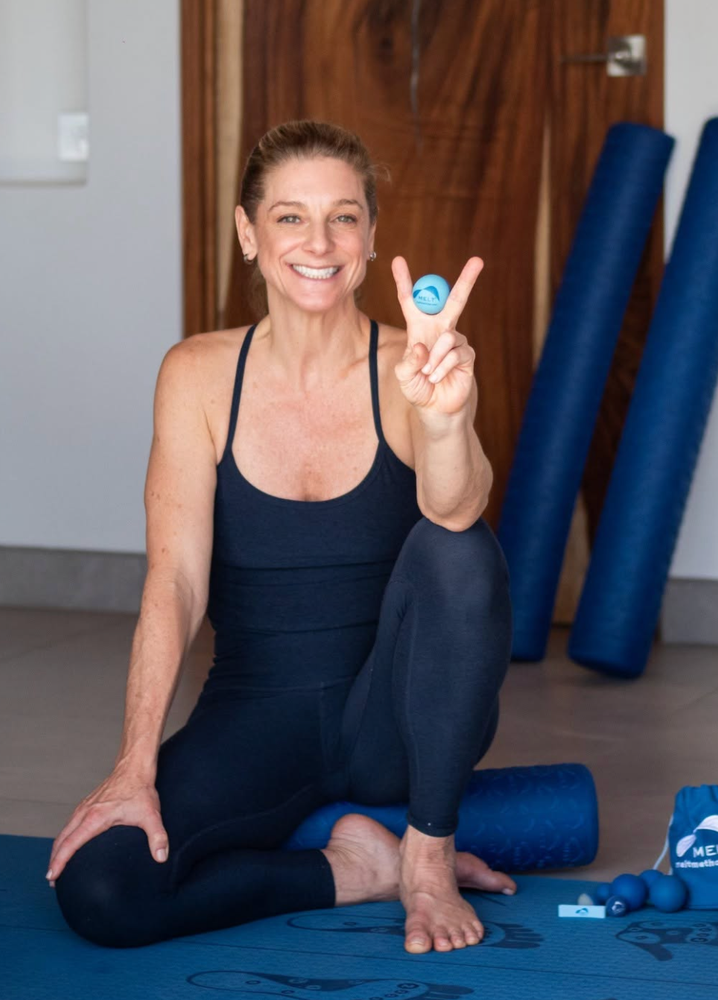
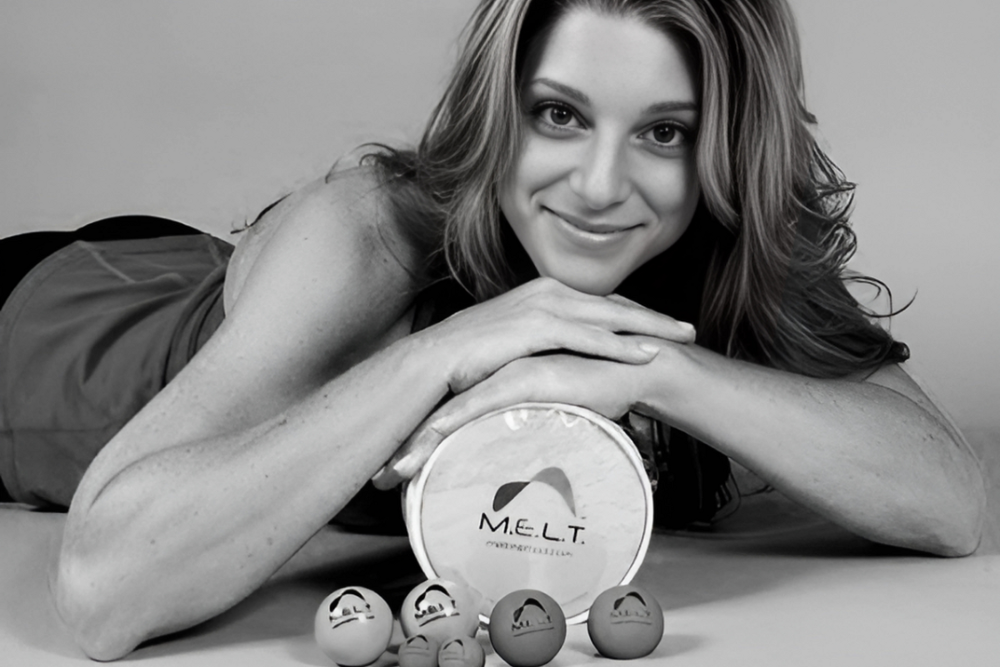
Sue Hitzmann and the MELT Method
Learn to notice what comes before pain.
A simple daily practice, founded by Sue Hitzmann.

The MELT Method
Self-care is the best healthcare system.
Knowing how to care for your body is a skill you can learn at any age.
MELT
More about MELT
Not foam rolling. Not stretching. Not exercise.

MELT is a daily, fascia-focused self-care practice you do at home with soft tools. It teaches you to feel your own body and move with less bracing.

The mission: enhance mobility, stability, and performance while restoring overall wellbeing.

By using fascia as a vehicle to restore neurological efficiency, you can help yourself catch pre-pain signals and stuck stress before it causes a chronic, nagging pain point you spend time and money trying to fix.

Knowing how to care for your body is a skill you can learn at any age.
support
What changes?
The techniques are gentle. The intention is bigger.

MELT gives people a practical way to support how the body moves, recovers, and adapts over time.


The goal isn't to do more.
It's to help the body respond better to what you're already asking it to do.
01
Move with less restriction.

MELT techniques are designed to support easier movement by changing the input the body receives rather than forcing greater range of motion.

02
Recover with more intention.

Short sessions can become part of how you prepare for movement, recover afterward, or support your body through travel, training, and everyday stress.

03
Build stability before intensity.

Sue's approach puts stability, control, and adaptability first so the body is better prepared for the demands you place on it.

See MELT in action
with Sue Hitzmann
The ideas behind MELT can sound complex. The techniques themselves are intentionally simple.
science
A little science, made useful
The science sounds complicated. The practice is easy.

Sue created MELT by translating what she was learning about connective tissue, the nervous system, and the body's ability to adapt into techniques people could actually use on themselves.

Connective tissue

Fascia forms an interconnected network throughout the body. MELT focuses on supporting the quality and responsiveness fascia rather than treating the body as a collection of isolated parts.

The nervous system

How the body senses pressure, movement, position, and stress influences how it responds. MELT uses gentle input instead of simply asking the body to tolerate more force.

Simple techniques

The goal is not to turn everyone into an anatomy expert. It is to give people practical ways to support how they age, heal, move, and feel…at any age.

why
Sue Hitzmann and the story behind MELT
A fitness and fascia expert who knows chronic pain personally.
origin
The story behind the method
A pill-free, pain-free option for longevity from someone who knows chronic pain personally.

Sue Hitzmann has been in the health and fitness field since 1988. A New York Times bestselling author, exercise physiologist, neuromuscular therapist, and founding member of the Fascia Research Society, she created the MELT Method after her own out-of-nowhere pain proved that everything she knew about health and fitness could not explain what causes pain to suddenly arise and become chronic without an acute traumatic event as the origin.

She has spent as much time learning and proposing new models and ideas with scientists as teaching classes and education courses, and has been a pioneer in bringing neurofascial models and science to the general public long before fascia was fashionable.

MELT grew out of the same question that has driven Sue's career: what is the body trying to tell us before something hurts?
begin
Ready to try MELT?
Choose the way you want to experience it.

Practice at home, join a live class, or learn with a MELT teacher. There isn't one right way to begin.

01
Start at home.

Learn at your own pace with MELT On Demand. Follow guided treatments, classes, and programs wherever it fits into your day.

Explore MELT On Demand  →
live
A great place to start
Take a live MELT class.

Experience MELT with real-time guidance. Follow along, learn the techniques, and feel the difference with an instructor leading the way.

See Upcoming Live Classes  →
03
Find a MELT teacher.

Want an in-person experience? Find a trained MELT teacher and explore classes available in your area.

Find a MELT Teacher  →
MELT
MELT in the real world
A method becomes more meaningful when you can see it in motion.

Follow along with Sue, the MELT community, and the ideas that continue to shape how people care for their bodies.

Sue Hitzmann
 

Fascia educator, New York Times bestselling author, speaker, and lifelong student of the human body.

Book Sue  →
Stay connected

Follow Sue for conversations around fascia, longevity, movement, resilience, and living well.